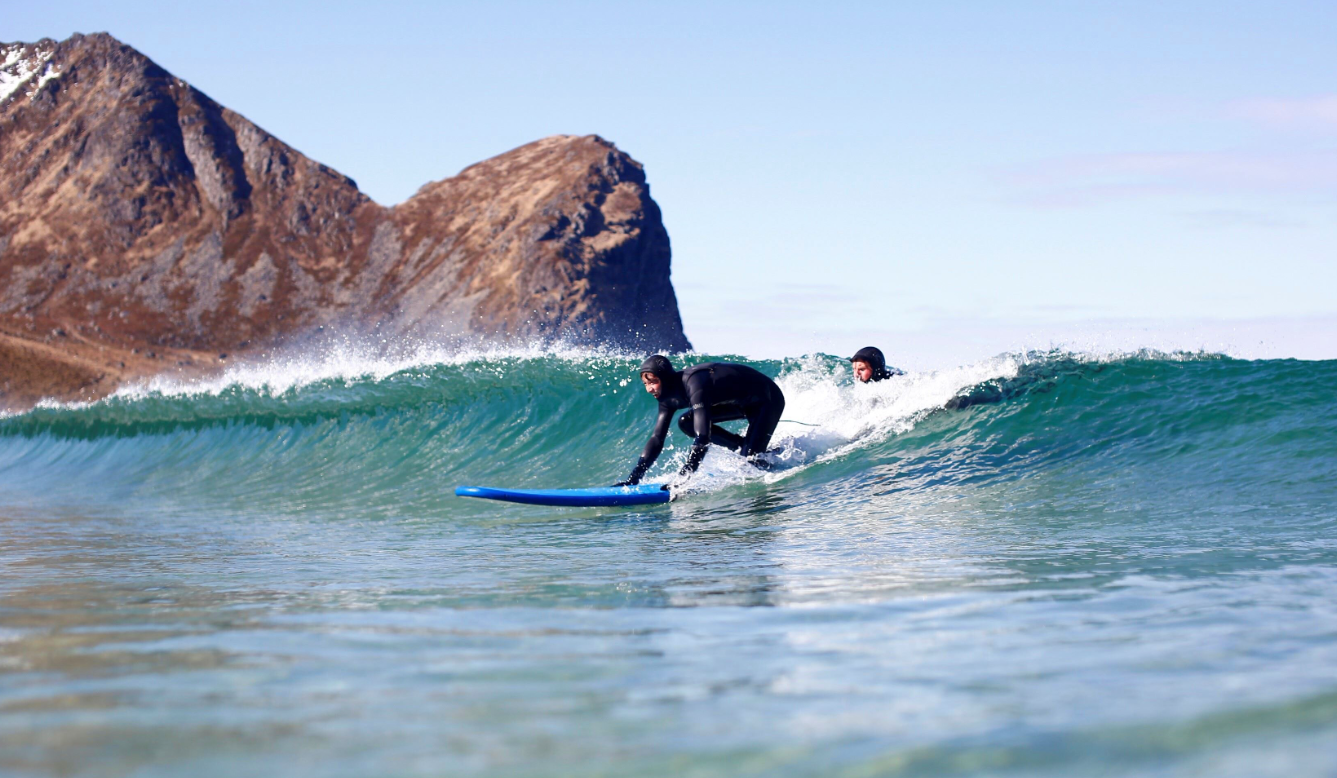
A wave can look perfectly manageable from the beach. Paddle into it, though, and everything changes. The face grows steeper, the board accelerates, and suddenly there are only a few seconds to stand, choose a line or pull back.
That moment reveals why surfing is harder than it appears. Standing on a board is only one part of the process. Surfers must read approaching waves, find the right takeoff position, paddle efficiently and adjust their movements as the water changes beneath them.
A clean pop-up will not rescue a poorly chosen wave that closes out immediately. Strong paddling is equally ineffective if the surfer starts too far from the peak or takes off in the wrong direction.
Progress comes from connecting these surfing skills. Catching more waves matters, but learning which ones offer a rideable face, where to position the board and how to use the available speed makes each session more productive.
Understanding Waves and How Surfing Works
Surfing works by harnessing the energy of moving waves. Most recreational surf comes from wind-generated swells that travel across the ocean before reaching shallower coastal waters.
As a swell approaches shore, its interaction with the seabed changes its speed and shape. The wave steepens until its crest becomes unstable and breaks. Surfers use the sloping face to accelerate and travel across the wave, ideally staying ahead of the breaking section.
Catching a wave involves building momentum and positioning the board on the approaching swell. As the wave steepens, gravity helps accelerate the board down its face. Once standing, the surfer controls direction through foot pressure, rail engagement and adjustments in body position.
The difficulty is that waves rarely behave identically. Even at a familiar beach, changes in tide, wind and swell direction can shift the peak and alter the timing needed for a successful takeoff.
Wave Formation and Breaking Waves
Ocean swells develop when wind transfers energy to the water. Their size and organization depend largely on wind strength, duration and fetch, the distance over which the wind blows across the surface.
Wave energy depends on several characteristics, including height and period. For waves of comparable height, a longer period generally indicates greater energy transport. The effect on breaking waves, however, also depends on water depth, seabed contours and local conditions.
Gently sloping seabeds often favor gradual spilling waves, while steeper profiles can produce plunging breaks. The incoming wave’s shape and the rate at which the water becomes shallow also influence how it breaks.
Three common breaking patterns are:
- Spilling waves: The crest breaks gradually, with whitewater flowing down the face. Small, gently spilling waves are often suitable for beginners.
- Plunging waves: The lip pitches forward and may form a hollow section or barrel. These waves demand accurate positioning and can produce powerful impacts.
- Surging waves: The wave reaches very shallow water without developing a conventional rideable face. These conditions can be particularly hazardous near steep shorelines.
Surf breaks are also classified by their underwater features. Beach breaks occur over sandbanks, reef breaks over rock or coral, and point breaks form where waves bend around a headland or similar coastal feature.
Sandbanks shift with currents and storms, changing where waves break. Reef breaks have more stable bottom contours, although swell direction and tide still determine their behavior.
Neither setting guarantees an easy ride. A shallow reef leaves little margin for error, while a powerful beach break can produce heavy shorebreak and strong currents.
Reading Surf Conditions
Before entering the water, experienced surfers watch several sets to understand where waves begin breaking and how they develop.
The
is the area where a wave first starts to break. The
is the unbroken section extending away from it. A wave that peels gradually down the line gives surfers room to travel across its face.
A closeout behaves differently. Most of the wave breaks almost simultaneously, leaving little opportunity to turn or maintain a controlled ride. It may still provide a short straight ride in suitable beginner conditions.
Several factors help determine whether a break is worth paddling into:
- Swell direction: Influences how waves approach the coastline and interact with underwater contours.
- Wave period: Measures the interval between successive swell crests and offers clues about wave energy.
- Wind: Light offshore winds often help keep wave faces clean, while strong onshore winds can create choppy conditions.
- Tide: Changes water depth over sandbanks, reefs and other underwater features.
- Sets: Groups of larger waves arriving intermittently, often separated by quieter intervals.
Conditions can change considerably during one session. A sandbank producing manageable waves at mid-tide may become too shallow or stop breaking effectively as the tide changes.
Wave height is not a reliable measure of difficulty on its own. A small, fast-breaking wave over shallow reef can be more demanding than a larger, slower wave at a sheltered beach.
Wave selection improves with observation. Watching where other surfers take off, which lines they follow and where rides end can reveal the most workable sections of a break. For anyone surfing waves at an unfamiliar location, those few minutes on shore can prevent a frustrating session.
Mastering the Pop-Up and Surf Stance
The pop-up is the transition from lying on the board to standing. Done correctly, it places the surfer in a balanced position without sacrificing the momentum gained during takeoff.
Beginners often rush this movement. As the wave picks up the board, they scramble upright, place their feet unevenly or shift too much weight toward the nose.
A controlled transition is more reliable than simply trying to stand as quickly as possible. Foot placement and timing become especially important when the takeoff is steep.
Essential Wave Riding Techniques
Effective wave riding begins before the board starts moving down the face. The surfer must position the board correctly, accelerate at the right moment and complete the pop-up without disrupting its direction.
While paddling, lie along the board’s centerline, keeping the nose at a height that allows it to move without excessive drag.
Too much weight forward can cause the nose to dig into the water, a mistake commonly called pearling or nosediving. Lying too far back raises the nose and makes catching waves more difficult.
Begin paddling early enough to build speed as the wave approaches. Once the wave picks up the board, perform the pop-up:
- Place the hands beside the chest, close to the ribs rather than near the nose.
- Press through the hands to lift the torso and create space underneath.
- Bring the feet beneath the body in a coordinated movement, avoiding unnecessary contact with the knees.
- Set the feet at separate positions along the board, with the front foot nearer the middle and the rear foot toward the tail. Keep the knees flexed.
- Raise the chest and look in the intended direction of travel.
Pop-up technique varies with flexibility, experience and board dimensions. Some surfers move both feet into position almost simultaneously, while others use a slightly staggered transition.
On an unbroken wave, an angled takeoff can help the surfer establish a line across the face before reaching the bottom. This is particularly useful when a straight drop would leave little time to turn.
For surfing for beginners, consistent whitewater takeoffs are a useful starting point. They allow new surfers to develop the movement before attempting faster green waves, where timing is less forgiving.
Surf Stance
A good surf stance allows the rider to stay balanced while responding to changes in the wave. The knees remain flexed, the body stays relaxed, and the feet provide a stable base without restricting movement.
For beginners, the feet are usually placed a comfortable distance apart along the board, with the front foot near the stringer, the board’s centerline, and the rear foot farther toward the tail. Both feet are oriented across the board at a natural angle rather than pointing directly toward the nose.
Exact placement depends on board length and the maneuver. Longboard surfers often walk along the deck to adjust trim, while shortboard riders use pressure near the tail and fins to initiate tighter turns.
Two stance orientations are common:
- Regular: Left foot forward.
- Goofy: Right foot forward.
Neither stance offers an inherent advantage. Most surfers discover their preferred orientation through practice and natural coordination.
Keep the eyes directed along the intended path rather than toward the feet. Looking down can pull the head and shoulders out of alignment, making the board harder to control.
Weight distribution should remain adjustable. Excessive pressure on the back foot can slow the board, while moving too far forward increases the risk of catching the nose, especially on steep sections.
The arms contribute to balance, but exaggerated movements often make corrections harder. A functional stance gives the surfer room to absorb bumps, shift weight and prepare for the next maneuver.
Paddling and Catching Waves
A large part of every surf session is spent paddling. Surfers must reach the lineup, reposition between sets and accelerate into waves, often repeating the process for an extended period.
Efficient paddling reduces wasted effort and makes it easier to reach a suitable takeoff position. Technique matters as much as physical endurance, particularly when conditions become crowded or demanding.
Paddling Technique
Begin by finding the correct position on the board. The nose should sit close enough to the water for efficient movement without digging beneath the surface.
Lift the chest enough to see ahead and allow the arms to move freely. Excessive arching through the lower back creates unnecessary fatigue and can interfere with a smooth stroke.
Reach forward, enter the water cleanly and pull backward with controlled pressure. The recovery phase should bring the arm forward above the surface without causing excessive side-to-side movement.
Several habits improve paddling efficiency:
- Keep the legs relatively still instead of kicking continuously.
- Avoid rocking the board from side to side.
- Maintain a steady rhythm when covering distance.
- Increase stroke frequency when accelerating into a wave.
- Use the shoulders, back and trunk together rather than relying entirely on the arms.
Longer, controlled strokes work well when traveling through the water. Catching a wave often requires a shorter burst of faster, more powerful strokes.
Board design also makes a difference. A larger, more buoyant board generally offers better paddling stability and helps beginners catch waves earlier than a small, low-volume shortboard.
A suitable soft-top longboard therefore gives new surfers more opportunities to practice timing and technique without constantly struggling to generate enough speed.
Turning and Maintaining Speed
Once standing, surfers must learn to follow the wave rather than simply travel toward shore. The first directional change may begin during an angled takeoff, which positions the board across the open face.
After dropping toward the lower part of the wave, a surfer may perform a
. This maneuver uses rail engagement, foot pressure and coordinated body movement to redirect the board upward or across the wave.
On a shortboard, the back foot plays an important role in controlling the tail. The head, shoulders and hips rotate toward the intended path while the legs manage pressure through the rails.
Speed depends on more than paddling or gravity during the initial drop. Once riding, surfers preserve momentum by choosing an effective line and staying connected to sections of the wave that provide usable energy.
Two techniques are particularly useful:
- Trimming: Maintaining an efficient position and angle on the wave face to preserve speed with minimal unnecessary movement.
- Pumping: Using coordinated turns, compression and extension while moving between higher and lower sections of the wave to generate speed.
Pumping is most effective when timed with the wave’s shape. Simply moving up and down without proper rail engagement can waste momentum.
On a slow, gently breaking wave, holding a clean trim line may work better than forcing repeated turns. Faster sections may require immediate changes in direction to stay ahead of the breaking lip.
These surf techniques become more effective when surfers recognize which parts of a wave offer speed and which require a change of direction. A closing section may call for a safe exit rather than another maneuver.
How Surfers Develop Balance and Coordination
Surf balance is dynamic. The board moves beneath the rider while the wave continually changes shape, slope and speed.
Beginners concentrate on staying upright. More experienced surfers learn to make smaller corrections while directing the board toward the next section of the wave.
Good coordination involves responding to movement through the ankles, knees and hips without allowing the upper body to become unstable. The timing of these adjustments matters: pressure applied too early or too late can interrupt an otherwise smooth turn.
Repeated exposure to different wave shapes helps surfers recognize how their boards respond. They gradually learn when to shift weight, how much pressure a rail requires and when to release it.
Balance boards and other land-based exercises can develop body awareness, but they cannot reproduce the changing forces and timing of an actual wave.
Training for Better Surf Performance
Surf training should reflect what actually happens during a session: extended periods of paddling, short accelerations, quick transitions to standing and controlled movement on an unstable surface.
The physical demands involve shoulder endurance, trunk stability, leg strength and cardiovascular fitness. Developing these qualities can make sessions less tiring and help surfers maintain technique as fatigue builds.
Training outside the water supports progress, but it cannot replace practical experience with waves.
Strength and Mobility
The upper back and shoulders support repeated paddling strokes. Trunk strength helps stabilize the body and transfer force during turns, while the legs manage pressure through the board.
Useful exercises include squats, split squats, rows, push-ups and controlled trunk rotations. They develop strength across the main muscle groups used in surfing without attempting to reproduce every movement on land.
Mobility deserves equal attention. Limited hip mobility can make the pop-up difficult, while restricted thoracic rotation may affect turning. Shoulder mobility also contributes to comfortable, efficient paddling.
A practical routine can include hip-opening exercises, thoracic rotations and controlled shoulder movements before or after training.
Avoid forcing joints into extreme ranges. Gradual mobility work is more useful than aggressive stretching, particularly when the shoulders are already fatigued from paddling.
Recovery matters when surf sessions become frequent. Repeated paddling loads the shoulder complex, so training volume should increase gradually, with adequate rest between demanding sessions.
Paddling Endurance
Surf paddling combines sustained aerobic work with short bursts of high-intensity effort. A surfer may paddle steadily to reach the lineup, wait between sets and then accelerate sharply to catch a wave.
Training can reflect that pattern through moderate paddling intervals followed by shorter, faster efforts.
Swimming, rowing and other aerobic activities can improve general cardiovascular fitness. However, they do not fully reproduce the body position and movement patterns required when paddling a surfboard.
In-water sessions provide more specific conditioning. Alternating steady paddling with brief accelerations develops the ability to change pace while maintaining technique.
Workload should match experience. Beginners benefit from controlled, repeatable efforts rather than exhausting sprints that cause their paddling form to deteriorate.
Surf fitness is not simply about sustaining maximum effort. The ability to recover between sets, maintain an efficient paddling rhythm and produce a short acceleration when needed is equally valuable.
Progressing From Small Waves to More Challenging Surf
Moving into larger or more powerful waves should depend on demonstrated ability rather than confidence alone.
Small, gently breaking waves provide room to practice takeoffs, directional control and safe exits. Before increasing difficulty, surfers should be able to catch suitable waves consistently, avoid other riders and recover from unsuccessful attempts.
The next stage usually involves catching unbroken green waves, establishing an angled takeoff and connecting basic turns along the face.
Wave height is only one factor. A clean, shoulder-high wave at a forgiving point break may be easier than a smaller wave that breaks rapidly over a shallow sandbank.
As waves become steeper, takeoff timing becomes more demanding. A late drop leaves less time to establish balance and can increase the likelihood of pearling or losing control.
More powerful conditions also introduce challenges beyond the ride itself. Strong currents, long paddle-outs and crowded lineups can make reaching the correct position or returning to shore difficult.
Surfers should be capable of returning to safety without relying entirely on their board or leash. Lessons from qualified instructors and sessions with experienced companions can help identify suitable conditions for progression.
Common Surfing Mistakes and How to Correct Them
Many surfing problems begin before the rider stands. Incorrect positioning, poor wave selection or a rushed takeoff can undermine the rest of the ride.
Recognizing the cause makes practice more productive.
Focusing on the board can pull the upper body forward and disrupt balance. Keep the head raised and look along the intended path.
Locked knees reduce the ability to absorb changes in the wave face. Maintain an athletic stance that allows the legs to respond naturally.
Waiting until the wave is already breaking can lead to an unstable, rushed takeoff. Begin building momentum while the approaching wave is still manageable.
Sitting too far outside may result in missed waves, while positioning too deep can leave the surfer facing an unrideable section. Observe several sets to identify where successful takeoffs occur.
A low-volume board can make learning unnecessarily difficult. Choose equipment that supports stable paddling and reliable foot placement before progressing to more demanding designs.
Upper-body rotation without appropriate foot pressure and rail engagement often produces little change in direction. Coordinate the movement through the whole body.
Dropping in on someone already riding creates a collision risk. Check who has priority and whether another surfer is approaching along the same section.
Returning directly through an active wave face puts both paddlers and riders at risk. Use a channel or a route away from the main riding line whenever possible.
Rather than trying to correct everything in one session, focus on one recurring problem. Short video recordings can reveal mistakes in foot placement, timing or posture that are difficult to notice while riding.
Staying Safe in the Water
Surf conditions can change quickly, and even familiar beaches present risks from waves, currents, weather and other water users.
Before paddling out, check the forecast and spend time observing the break. Identify suitable entry and exit points, along with any submerged rocks, shallow reefs or areas of strong current.
Rip currents are concentrated flows of water moving away from shore. They do not pull swimmers underwater, but they can carry people beyond the breaking waves and make returning difficult.
If caught in a rip current, avoid fighting directly against the flow until exhausted. Stay calm, conserve energy and try to move out of the current when conditions allow. If unable to return safely, float and signal for assistance.
Surf Safety and Equipment
Equipment should suit the surfer’s ability, the water temperature and the hazards at the break.
Soft-top boards are commonly used in beginner lessons because their construction is generally more forgiving during minor impacts. Their size and buoyancy also help new surfers develop control.
A properly fitted leash reduces the chance of losing the board after a fall. Check the cord, swivels and attachment points for damage before entering the water.
A leash is not a rescue device. It can break, become entangled or allow the board to recoil toward the rider. In certain river and strong-current environments, conventional leashes can create serious entrapment hazards.
Depending on local conditions, suitable equipment may also include a wetsuit, rash guard, surf helmet or protective footwear.
Sun protection matters even on cool or cloudy days. Long sessions can involve substantial ultraviolet exposure, particularly with sunlight reflected from the water.
Lineup etiquette is another essential part of safety. At many breaks, priority generally belongs to the surfer closest to the breaking peak, provided another rider has not already established the ride. However, local practices, the direction of the wave and situations involving multiple peaks can affect how priority is determined.
Never drop in on someone already riding. Avoid releasing the board when others are nearby, and do not assume another surfer has seen you.
During a fall, protect the head and face with the arms. Avoid diving headfirst, especially in shallow water, and surface cautiously because the board may still be close.
Fatigue reduces paddling efficiency and reaction time. Head in while you still have enough energy to return safely rather than waiting until exhaustion makes even a routine paddle difficult.
FAQ
How long does it take to learn surfing?
Many beginners can practice basic pop-ups and ride gentle whitewater during their first few lessons. Consistently catching unbroken waves and controlling direction usually takes much longer. Progress depends on practice frequency, conditions, equipment and individual coordination.
What is the easiest type of wave for beginner surfers?
Small, gently spilling waves are generally the easiest to learn on. They offer a more gradual takeoff and allow time to establish balance. A supervised beach with a sandy bottom and manageable currents is often a suitable starting point.
Is surfing more about strength or technique?
Both contribute, but timing, positioning and wave selection are especially important. Strength supports paddling and control, while technique determines how effectively that effort translates into catching and riding waves.
What is the difference between regular and goofy stance?
Regular-footed surfers ride with their left foot forward, while goofy-footed surfers place their right foot forward. These terms describe stance orientation, not experience or ability.
Can someone practice surfing without going into the ocean?
Pop-up drills, strength training, mobility exercises and balance work can help prepare the body for surfing. They cannot fully reproduce wave timing or the changing movement of a board on water, so practical experience remains essential.